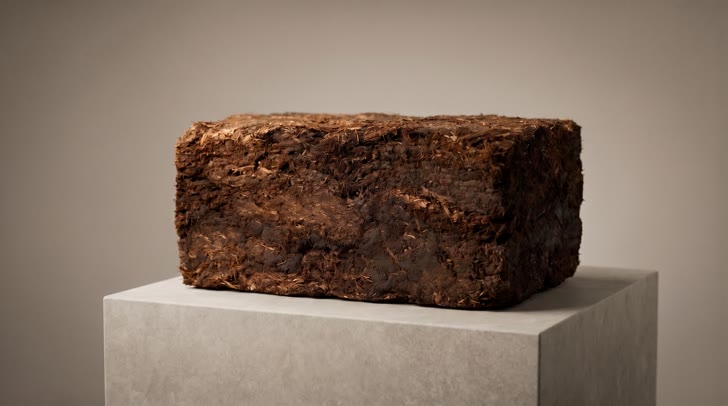
High-Moor Peat
Working-grade sphagnum peat from CIS raised bogs — GOST-certified, rich in humic acids, built for substrate and compost programmes.
High-moor peat is formed in raised bogs from sphagnum moss under rain-fed (ombrotrophic) conditions — low mineral content, high acidity, and the porous, sponge-like structure that makes it the default base for growing media across temperate horticulture. We supply it GOST-certified from CIS peatlands, by the 40-ft sea container, for substrate manufacturers, compost blenders, and field-scale soil conditioning.
Think of it as the volume-grade counterpart to our Baltic Peat — same geological class, priced and packaged for composting lines and mixed soil programmes rather than the premium glasshouse circuit.
- Humic acids 37.8%
- Ash content 8.4%
- pH 4.43 (H₂O)
- Moisture 54.7%
- GOST 9517-94 certified
Overview
Excellent physical structure, modest chemical fertility
High-moor peat is rain-fed: the bog receives its water and minerals only from precipitation, not from groundwater. That ombrotrophic regime produces a peat with very low mineral contamination, pronounced acidity, and a loose, open structure — ideal for root-zone physics, modest on its own for plant nutrition.
Its value sits in the physics, not the chemistry. Used raw, high-moor peat is a substrate and soil conditioner. Combined with nutrients and pH correction, it is the base for some of the most productive growing media in the world.
What you get, at a glance
- Retains water like a sponge — exceptional field capacity
- High aeration keeps the root zone oxygenated
- Lightweight, loose structure — easy to mix and transport
- Very low soluble salts — will not burn roots or seedlings
- Acidic pH — suited to acid-loving crops, or to pH-corrected blends
Certified analysis
Test Results
Lot-by-lot certification against GOST standards. Figures below are from the most recent production run; a full certificate of analysis ships with every programme.
| Indicator | Test Method | Unit | Result | Standard Requirement |
|---|---|---|---|---|
| Mass fraction of water | GOST 11305-2013 p.6.2 | % | 54.7 ± 0.8 | 55 – 70 |
| Ash content | GOST 11306-2013 p.7 | % | 8.4 ± 0.3 | Not more than 15 |
| Acidity | GOST 11623-89 p.2 | pH units | 4.43 ± 0.30 | 2.8 – 6.0 |
| Mobile iron oxides (as FeO) | GOST 27894.7-88 p.2 | mg / 100 g | 19.2 ± 2.8 | Not more than 1.0 % |
| Humic acids | GOST 9517-94 | % | 37.80 ± 2.98 | Not less than 30.0 |
Source: accredited lab report, current production lot.
Physical advantages
The physics are the product
These are the levers high-moor peat pulls inside a growing medium — the reason it has been the substrate default for sphagnum-based horticulture for a century.
Water retention
Sponge-like porosity holds moisture through irrigation cycles, stabilising the root-zone moisture regime.
Aeration
Open structure keeps oxygen moving to the roots — critical for respiration and disease suppression.
Lightweight substrate
Low bulk density cuts handling costs across mixing, bagging, and logistics.
Uniform germination
Fine, consistent structure supports even moisture around every seed.
Thermal buffering
Low heat conductivity protects roots from the rapid temperature swings of greenhouse production.
Low soluble salts
Clean slate for fertiliser programmes — no background EC to work around.
Chemical limitations
Honest about what raw peat cannot do
High-moor peat is not a fertiliser. Treat it as a growing medium — then dial in the chemistry separately. Knowing the limits up front is what keeps crop plans on target.
Very low plant-available N, P, and K — needs fertilisation for most crops
pH 3 – 4.5 inhibits many crops without liming to a target range
Low humification (~≤ 20 %) — structure stays intact, nutrient release is slow
Iron is present in mobile form — relevant for substrate balancing on sensitive crops
How it is used
Substrate, compost component, soil conditioner
Growing medium
Used as the base for seedling production, greenhouse substrates, and container growing. Rarely used alone — typically mixed with mineral soil, lime, and a fertiliser programme calibrated to the target crop.
Compost component
Blended with manure, mineral fertilisers, and organic residues to improve compost structure, aeration, and moisture retention during the composting cycle.
Soil conditioner
Worked into depleted mineral soils to rebuild structure and water-holding capacity — particularly in sandy or degraded profiles where organic matter has crashed.
Rule of thumb: alone → weak fertility; combined with nutrients and pH correction → high efficiency.
Plant growth
What it does for the crop
Root development
Loose, aerated matrix lets roots extend freely and uniformly.
Moisture regime
Stabilises water availability between irrigations — fewer stress events.
Aeration for respiration
Oxygen at the root surface keeps metabolic activity high.
Uniform germination
Consistent moisture around every seed means consistent emergence.
Microbial habitat
Once blended and limed, the matrix hosts the microbiology that unlocks nutrients.
Transplant success
Root-ball integrity holds through pricking out and transplanting.
Compare
High-Moor vs Low-Moor Peat
Choosing between the two is primarily a question of what you are trying to do: supply structure, or supply nutrition.
| Property | High-moor peat | Low-moor peat |
|---|---|---|
| Nutrients | Very low | High |
| pH | Acidic (3 – 4.5) | Neutral to slightly acidic |
| Best use | Substrate, compost, conditioning | Direct fertilisation |
| Efficiency | Medium (raw) / High (treated) | High |
Applications
Typical Applications
Substrate manufacturing
Base component for bagged potting mixes and professional growing media.
Compost production
Structural and moisture component in commercial compost programmes.
Seedling and nursery production
Fine fractions for propagation trays and seedling blocks.
Greenhouse substrates
Blended with mineral soil, lime, and fertiliser to target crop needs.
Soil conditioning
Rebuilding structure in sandy, compacted, or degraded mineral soils.
Acid-loving crops
Blueberries, azaleas, rhododendrons — where the native acidity is a feature, not a bug.
Sustainability
Peatlands, carbon, and responsible sourcing
Peatlands are among the planet's largest natural carbon stores. Drainage and poorly managed extraction release CO₂ and degrade the ecosystem — so sourcing practice matters as much as the product specification.
- Supplied from regulated, permit-managed concessions
- Lots shipped with origin documentation alongside certificate of analysis
- Compatible with regenerative and paludiculture-aligned programmes when used at appropriate rates
If your procurement requires specific sustainability documentation (FSC, peat-responsibility schemes, certified concession data), ask at RFQ stage — we route the order through the suppliers that meet the standard.
FAQ
Common Questions
How is this different from Baltic Peat?
Same geological class — both are high-moor sphagnum peat from raised bogs — but positioned and priced differently. Baltic Peat is our reference-grade horticultural substrate (low decomposition H2, Dutch-style professional production). High- Moor Peat is working-grade: same physics, GOST certification, and priced for compost lines, substrate manufacturing, and field-scale soil conditioning rather than premium glasshouse programmes.
Can I use it on its own as a fertiliser?
No. Nutrient content is very low, and the native pH will inhibit most crops. Use it as a substrate or compost component, with lime and fertiliser layered on top.
What shipping forms are available?
Bulk 40-ft sea containers are the default. Baled and shrink-wrapped pallet loads are available for substrate manufacturers that require palletised intake. Talk to us about your receiving setup at RFQ stage.
Do you offer trial volumes?
Yes. We can structure a single-container pilot, or share container space with an existing shipment if the timing works. Send us your receiving port and target volume and we will quote accordingly.
Next step
Need a certificate of analysis with your lot number?
Send us your destination port, target volume, and Incoterms. We return a firm CFR / CIF offer along with the full GOST certificate pack within 48 hours.
Frequently asked
Buyer Questions
What is the difference between high-moor and low-moor peat?
High-moor (raised-bog) peat is rain-fed: minimal mineral content, low ash, higher humic acid concentration — better for horticultural substrate and seed germination. Low-moor peat is groundwater-fed: higher mineral and nutrient content, more variable. We supply high-moor for substrate use; low-moor available on request.
What does GOST certification mean for high-moor peat?
Our high-moor peat is GOST-certified to standard 50890-96 (or later revisions). Each shipment carries the GOST analysis: humic acids 37.8%, pH 4.43, ash 8.4%. Full analytical reports with SGS verification are issued per parcel.
What is the minimum order quantity?
500 MT (~25 × 40-ft containers per programme). Smaller programmes are possible if combined with other peat or substrate orders.
Where does the high-moor peat originate?
CIS raised-bog peatlands — primarily Russia and Belarus. Specific extraction sites are nominated per shipment, with full Certificate of Origin issued.
Is high-moor peat suitable for hydroponics?
Yes. High-moor peat is the standard horticultural substrate for hydroponic and greenhouse vegetable production. It can be used neat or blended with perlite/vermiculite for specific drainage profiles.
Which Incoterms and ports are available?
FOB (CIS ports), CFR, and CIF GCC. CIF to Jebel Ali, Hamad (Doha), and Dammam are most common, with onward truck delivery available on request.
Explore
Related Products
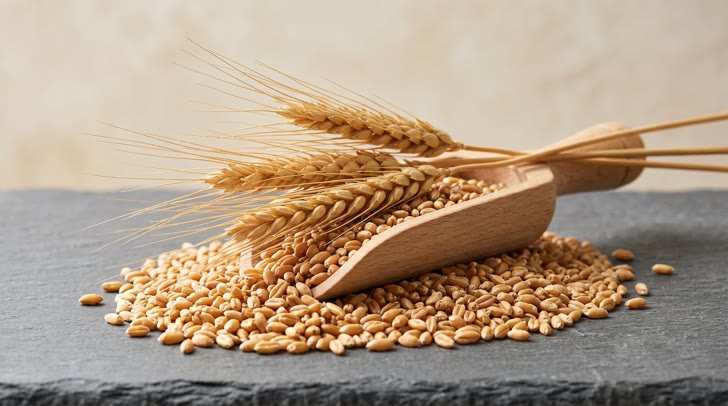
Wheat
Grade 3 milling wheat at world-class spec — bulk supply via the Aktau/Caspian corridor, with alternative origins on request.
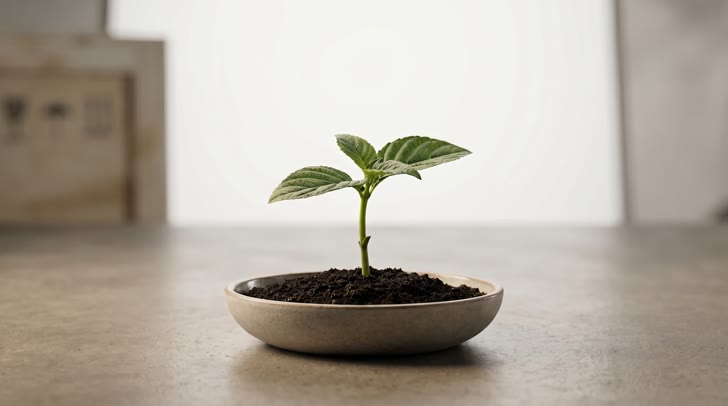
Organic Peat Suspension
A natural soil activator based on peat-derived humic and fulvic substances — liquid, concentrated, fertigation-ready.
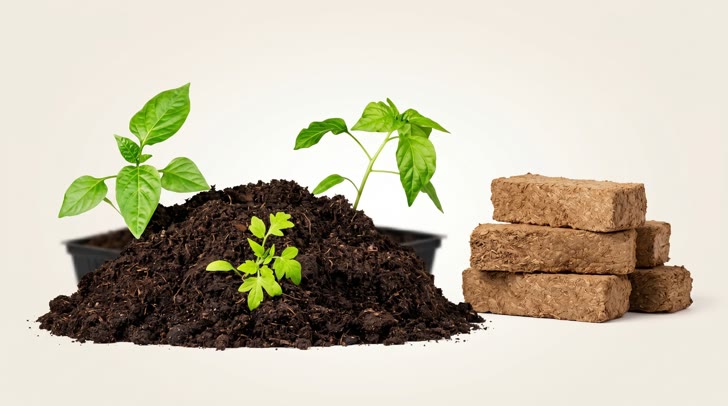
Baltic Peat
High-moss sphagnum peat from Baltic raised bogs — the reference substrate for professional horticulture.
Urea 46
46% nitrogen urea at world-class spec — prilled and granular grades, multi-origin supply via Caspian, Black Sea, and Persian Gulf corridors.
Chemical Fertilisers
Nitrogen, phosphorus, potassium, and NPK blends from vetted producers — in the specs your agronomy demands.